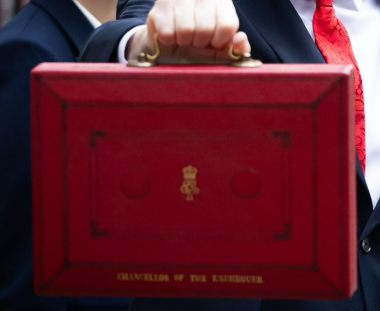
If you’ve already stopped work, the Autumn Budget 2026 included several announcements that could affect your retirement income, savings and the wealth you eventually pass on to your family.
While some changes provide welcome reassurance, others make it increasingly important to review how your pensions, investments and wider financial arrangements work together.
This summary reflects announcements and published guidance as at 2 November 2026. Some measures remain subject to legislation and final implementation details. The pension Inheritance Tax changes have already been legislated for and apply to deaths on or after 6 April 2027.
State Pension increases and Income Tax
The Government has confirmed that the full new State Pension will increase by 3.9% from April 2027, taking it to £13,036.40 a year.
This means the full new State Pension will exceed the frozen Personal Allowance of £12,570 for the first time.
To address this, the Government is introducing a new Pension Tax Allowance from April 2027. This is an automatic reduction in Income Tax, rather than an increase in the Personal Allowance. It will ensure that eligible people who are above State Pension age, or reach it during the tax year, whose total income does not exceed the full new State Pension will not have to pay Income Tax.
Those with income slightly above this level may also benefit from some tax relief, although the benefit will gradually reduce as income increases.
The measure is intended to apply for the tax years 2027/28 to 2029/30.
For retirees with other sources of income, including private pensions, savings interest or rental income, the continued freeze in Income Tax thresholds means more income could become taxable over time.
No cut to pension tax-free cash
Despite speculation before the Budget, the Government did not reduce the standard £268,275 lump sum allowance for pension tax-free cash.
The amount available to you will depend on your circumstances, including any previous pension withdrawals and whether you hold protected allowances.
There is therefore no new Budget-driven reason to bring forward a pension lump sum simply because of concerns about a reduction in the allowance.
Decisions about when and how to access pension savings should continue to reflect your income needs, tax position and longer-term retirement plans.
Changes to pension death benefits
The Budget announced the removal of the two-year deadline that can cause otherwise tax-free pension death benefits to become taxable if a pension provider takes too long to process them.
The change is intended to apply to relevant payments made on or after 28 October 2026.
This is particularly relevant where someone dies before age 75, as beneficiaries may otherwise lose favourable Income Tax treatment because of administrative delays.
Other conditions and tax allowances will continue to apply, so the change does not mean that all inherited pensions will automatically be tax-free.
The Government is also simplifying how tax is assessed and collected where pension lump sum death benefits exceed the available tax-free allowance.
Pensions and Inheritance Tax
A separate and potentially more significant change is approaching.
From 6 April 2027, most unused pension funds and pension death benefits will be brought within the scope of Inheritance Tax when someone dies.
This does not mean that every affected pension will incur Inheritance Tax. Available estate allowances and exemptions, including qualifying transfers to a spouse or civil partner, will still apply.
This was announced before the Autumn 2026 Budget, but it represents an important change for retirees who have been using pensions as a way of passing wealth to future generations.
Previously, pensions have often been particularly attractive assets to leave untouched because they generally sat outside the estate for Inheritance Tax purposes.
The forthcoming changes mean it may be worth reviewing pension beneficiaries, wills and how pension savings fit alongside other assets.
However, withdrawing money from pensions simply to avoid Inheritance Tax will not necessarily be beneficial, as doing so could create an immediate Income Tax liability or other unintended consequences.
Higher taxes on savings income
The Budget announced further increases to the tax rates applying to savings interest from 6 April 2027.
The rates will rise to:
- 24% for basic-rate taxpayers;
- 44% for higher-rate taxpayers; and
- 49% for additional-rate taxpayers.
The Personal Savings Allowance remains unchanged at £1,000 for basic-rate taxpayers and £500 for higher-rate taxpayers. Additional-rate taxpayers have no Personal Savings Allowance.
For retirees holding substantial cash savings outside tax-efficient accounts, these changes could increase the tax payable on interest received.
The Government has also confirmed that the £20,000 annual Cash ISA allowance will be retained, rather than reduced as previously planned. This remains part of the overall £20,000 annual ISA subscription limit.
For those drawing retirement income from a combination of pensions, cash and investments, it may be worth reviewing how assets are held and how withdrawals are structured to manage tax efficiently.
Workplace pension schemes
The Budget included an update to a previously announced measure that could benefit some retirees receiving a defined benefit, or final salary, workplace pension.
Proposed legislation will allow certain well-funded pension schemes to make discretionary payments from surplus assets directly to members. HMRC’s detailed policy note states that the measure will take effect from Royal Assent to Finance Bill 2026–27, so the start date remains subject to the legislative timetable.
Any payment would depend on the scheme’s financial position, rules and trustee decisions, and would be treated as pension income subject to the member’s marginal rate of Income Tax.
This does not mean that all defined benefit pension members will receive additional payments, but it could create opportunities for some schemes to share surplus funds with their members.
Serious ill-health pension access
The Government also announced changes intended to simplify access to pension benefits in cases of serious ill-health.
For serious ill-health lump sums, the revised test will require written medical evidence that the member can reasonably be expected to die within 12 months. Supporting evidence may also be provided by the member’s medical practitioner outside the UK where the member lives in the same country as the practitioner, or the pension scheme is established in that country.
These changes are intended to make access easier for eligible members with a terminal illness, including those relying on qualifying medical evidence from overseas. Receiving treatment abroad alone does not establish eligibility.
The changes will take effect on or after Royal Assent to Finance Bill 2026–27. Other eligibility and tax conditions will continue to apply.
Energy bills and household costs
The Budget included measures intended to provide some relief from higher household energy costs.
The temporary removal of VAT on domestic electricity in Great Britain, introduced in October 2026, has been extended until 30 June 2027. The Government estimates that the annualised Ofgem energy price cap in April 2027 will be around £50 lower than it would otherwise have been. This is not a guaranteed fall in the overall price cap or a £50 payment to each household; actual savings will depend on electricity use.
A one-off £100 Household Energy Payment will be provided from January 2027 to eligible households occupying their sole or main home in Council Tax bands A to D in England. Second homes and empty properties are excluded, and detailed eligibility rules will apply. Funding has also been allocated to devolved governments so they can provide comparable support.
The Government has also asked Ofgem to abolish domestic gas standing charges, aiming for implementation by the end of 2027 or as soon as possible thereafter. Gas suppliers would instead recover these costs through unit rates, meaning the impact will vary between households.
For retirees managing expenditure from a fixed or relatively stable income, these measures may provide some support, although future energy prices and inflation will remain important considerations.
What does this mean for you?
For retirees, the most important consideration is ensuring that your savings and pensions continue to provide the income you need throughout retirement, while taking account of changing tax rules and any wealth you wish to leave behind.
In particular, it may be worth reviewing:
- Retirement income: how State Pension, private pensions and investment withdrawals work together, and whether income is being drawn tax-efficiently;
- Pension tax-free cash: how much remains available and whether withdrawals are appropriate for your circumstances;
- Estate planning: the impact of the forthcoming pension Inheritance Tax changes and whether beneficiary wishes remain up to date;
- Cash and investments: making use of ISA allowances and reviewing exposure to higher taxes on savings interest;
- Workplace pensions: whether any changes to your scheme could affect your benefits; and
- Household expenditure: ensuring your retirement plans remain sustainable in light of inflation, energy costs and other ongoing expenses.
The key is to ensure that your retirement income and estate planning arrangements continue to work together, providing financial security during your lifetime while reflecting your wishes for the future.
Thank you,
The Citygate FP Team
Citygate Financial Planning Limited (trading as Citygate Financial Planning) is registered in England and Wales under company number 9188423, with its registered office at 80 Coleman Street, London, EC2R 5BJ. Citygate Financial Planning Limited is authorised and regulated by the Financial Conduct Authority (Firm Reference Number 647956).