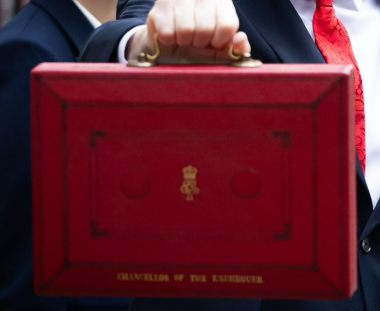
For younger adults, the Autumn Budget 2026 included several announcements that could be particularly relevant if you’re starting to build your longer-term savings and investments, managing student loan repayments or saving for your first home.
A new ISA for first-time buyers
The Government is introducing a new First Time Buyer ISA, which is due to launch from April 2029 and will replace the Lifetime ISA for new savers.
You’ll be able to contribute up to £4,000 each year, with a 25% Government bonus available towards the purchase of your first home, subject to an overall bonus limit of £20,000.
The qualifying property value will be up to £450,000 and, unlike the Lifetime ISA, there will be no upper age restriction.
One important difference is that the Government bonus will be calculated on the final account balance and paid when purchasing a qualifying property, rather than being added to the account each year.
Existing Lifetime ISA holders will be able to continue contributing to and using their accounts under the current rules. However, it won’t be possible to transfer directly from a Lifetime ISA into the new First Time Buyer ISA.
For anyone currently considering opening a Lifetime ISA, it’s worth understanding how the existing and forthcoming arrangements compare before deciding which approach is most suitable.
An immediate change for Lifetime ISA holders
From 29 October 2026, Lifetime ISA savings can be used towards an otherwise qualifying property costing more than £450,000, with a reduced 20% withdrawal charge, rather than the previous 25% charge.
In practice, this means that someone who contributed £4,000 and received a £1,000 Government bonus could withdraw £4,000 after the 20% charge, assuming no investment growth or losses.
Previously, the 25% charge would have left them with just £3,750.
The reduced charge removes the additional withdrawal penalty on your own savings, but it does not protect you from investment losses. The 20% charge applies to the amount withdrawn, effectively removing the Government bonus and any growth attributable to it.
This could be particularly relevant in London and the South East, where the £450,000 property limit has increasingly restricted first-time buyers.
The standard 25% withdrawal charge will continue to apply to other non-qualifying withdrawals.
Further help with buying your first home
The Government has also committed £4.7 billion to its new Your First Home equity-loan scheme, designed to help around 70,000 first-time buyers purchase qualifying new-build properties in England.
Under the scheme:
- Buyers will be able to access a Government equity loan of 20% of the property’s purchase price.
- The minimum deposit requirement will be just 2.5%, with a maximum deposit of 15%.
- The equity loan will be interest-free for the first five years, with interest charges increasing gradually thereafter.
- Household income limits will be £110,000 outside London and £140,000 within London, alongside regional property price caps.
Pre-registration is expected to open by the end of December 2026, with applications from February 2027 and the first loans available from April 2027.
While the scheme could make home ownership more accessible, it’s important to remember that an equity loan is different from a conventional mortgage.
The amount you repay on the equity loan will generally rise or fall with your property’s value, rather than simply matching the amount originally borrowed. This does not mean the Government jointly owns your home. Buyers will also need to consider the affordability of their mortgage and any future interest charges on the equity loan.
What about investing?
The planned £12,000 annual cap on cash ISA subscriptions has been reversed before taking effect. You can therefore continue to use up to the full £20,000 annual ISA allowance for cash savings, less any subscriptions to other types of ISA in the same tax year.
The Government has also announced that it will work with the investment industry to explore a new incentive for people investing in a Stocks & Shares ISA for the first time.
The details have not yet been confirmed, but the intention is to encourage more people to begin investing for their longer-term financial goals.
For younger adults, the important distinction remains between money needed in the short term and money that can be invested for longer.
Cash savings will generally be more appropriate for an emergency fund or a house deposit needed in the next few years, while investing may offer greater long-term growth potential for money that can be left untouched, typically for at least five years.
Investments can fall as well as rise in value, so the right approach will depend on your circumstances, objectives and attitude to risk.
What about student loans?
The October Budget did not introduce any new changes to student loan repayment thresholds.
However, the previously announced freeze to the Plan 2 repayment threshold at £29,385 a year from April 2027 until April 2030 remains in place.
If you have a Plan 2 loan, you generally repay 9% of your earnings above the relevant threshold.
With the threshold remaining fixed, future pay rises could mean more of your income going towards student loan repayments, leaving less of the increase available for everyday spending or saving.
Separately, the Government introduced a temporary 6% interest-rate cap on Plan 2 and Plan 3 student loans, applying from September 2026 to August 2027.
Although this limits the interest added to affected loan balances, it does not directly reduce monthly repayments, which are based on earnings rather than the outstanding balance.
Different student loan plans have different repayment rules, so the Plan 2 threshold won’t apply to everyone.
For your own planning, it’s worth checking which repayment plan you’re on, understanding the deductions from your earnings and considering whether you’re likely to repay the loan in full before it is written off.
What does this mean for you?
The most important thing isn’t necessarily choosing an ISA or investment straight away. It’s working out what you’re saving for and when you’re likely to need the money.
A simple way of thinking about it is:
Build emergency savings while making the most of workplace pension contributions, then balance saving for your first home, medium-term goals and longer-term investing according to your circumstances.
Different goals often need different homes for your money.
For those saving towards their first property, the new Government schemes could provide valuable support, but it’s important to understand the eligibility requirements, restrictions and longer-term implications before committing.
Equally, building good savings habits, making the most of workplace pension contributions and starting to invest appropriately for the longer term can make a significant difference over time.
The key is to have a plan that balances your immediate priorities with your longer-term financial security.
Thank you,
The Citygate FP Team
Citygate Financial Planning Limited (trading as Citygate Financial Planning) is registered in England and Wales under company number 9188423, with its registered office at 80 Coleman Street, London, EC2R 5BJ. Citygate Financial Planning Limited is authorised and regulated by the Financial Conduct Authority (Firm Reference Number 647956).